


Quick Answer: Breastfeeding after breast augmentation is possible for many women, although some may not produce a full milk supply. Incision location, implant placement, and the amount of milk-producing tissue you had before surgery may all affect milk production. The CDC notes there are no recent reports of clinical problems in babies of mothers with silicone implants.
Questions about pregnancy and nursing come up often in breast augmentation consultations, both from women planning a family and from those who already have implants and a baby on the way. In my Austin practice, planning a breast augmentation includes choosing the incision location, implant placement, and implant type, and each of these may matter if breastfeeding is in your future. Below, I cover what national health organizations say about nursing with implants and how you can prepare.
Key Takeaways About Breastfeeding After Breast Augmentation
- Many women with breast implants can breastfeed, though some may need to supplement.
- Incisions around the areola are more likely to reduce milk production.
- Implants placed below the chest muscle usually affect milk production less than implants above it.
- The CDC notes no recent reports of clinical problems in babies of mothers with silicone implants.
- Low milk supply can have many causes, and a lactation consultant may help.
Can You Breastfeed With Breast Implants?
In many cases, yes. According to the FDA, some women who have breast augmentation can breastfeed successfully and some cannot. The CDC notes that most mothers who have had breast surgery can produce some milk, although they may not produce a full supply.
Breastfeeding does not have to be all or nothing. Women without a full milk supply can still breastfeed, and some supplement with formula or pasteurized donor milk.
It also helps to know what augmentation does and does not change. Glandular tissue is the part of the breast that produces milk. Based on Cleveland Clinic, breast augmentation changes the size and shape of the breast but does not add glandular tissue. If you had less of that tissue before surgery, implants will not change it.
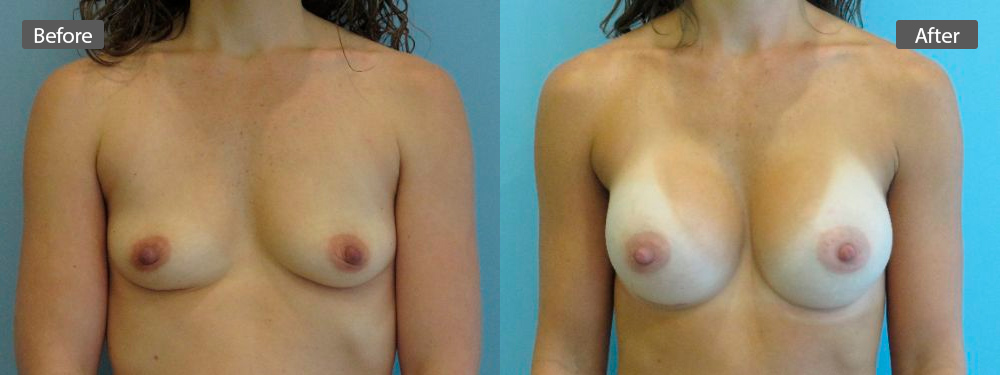
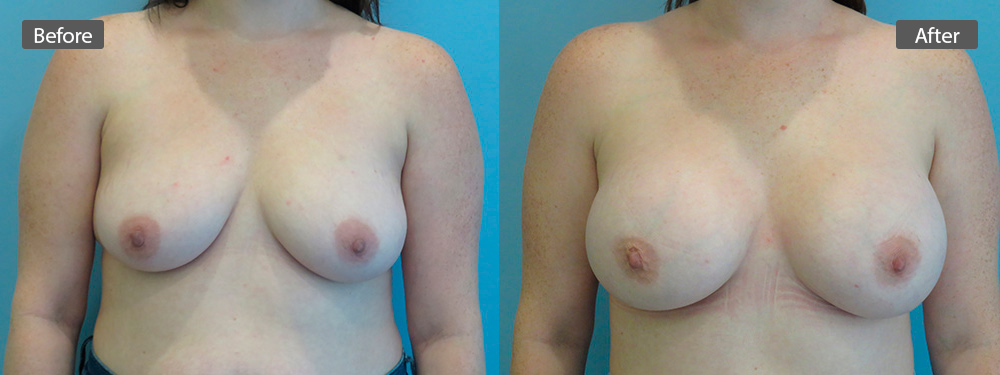
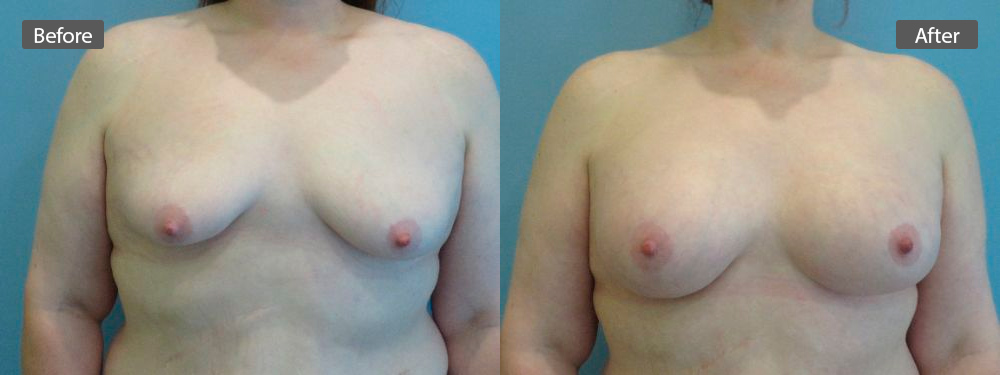
Warning:
This gallery contains nudity. Please click OK to confirm you are at least 18 years of age and are not offended by this material.
* All patients are unique and individual results may vary.
What Can Affect Milk Supply After Augmentation?
Several factors may play a role. Cleveland Clinic notes that the location, type, and size of an implant can all influence milk production, and that the surgery itself can cause nerve and blood vessel damage that may affect supply.
Your natural anatomy matters too. The CDC explains that some women have underdeveloped breast tissue before any surgery, which may show up as breasts that look tubular, widely spaced, or noticeably uneven. Some women with these features choose breast surgery, so a lower milk supply in these cases may relate to the original breast tissue rather than the implants.
Does the Incision Location Matter?
I place breast implants through one of three incisions:
- Inframammary: In the crease beneath the breast
- Periareolar: Along the edge of the areola
- Transaxillary: In the armpit
If breastfeeding is a priority, incision location is worth discussing. The CDC notes that incisions around the areola are more likely to reduce milk production. Inframammary and transaxillary incisions are placed away from the areola, although any breast surgery may affect the nerves and ducts involved in nursing. The CDC also notes that, over time, ducts cut during surgery may reconnect or form new pathways.
Does Implant Placement Matter?
Implants can sit in one of two pockets. A subglandular implant is placed behind the breast tissue and above the chest muscle. A subpectoral implant is placed underneath the chest muscle. The best pocket for you depends on your anatomy, the implant type and shape, and how much enlargement you want.
According to the CDC, implants placed below the muscle usually affect milk production less than implants placed above it. That does not mean placement above the muscle rules out breastfeeding, but it is one more factor to discuss during planning.
Can Breast Implant Materials Affect Breast Milk?
This is one of the most common concerns. I offer both saline implants, which are filled with sterile saltwater, and silicone gel implants. The breastfeeding information from the CDC and FDA focuses on silicone implants, and here is what they report:
- Infant health: The CDC notes that research is limited, but there are no recent reports of clinical problems in infants of mothers with silicone implants.
- Breastfeeding guidance: The CDC cites a 2001 American Academy of Pediatrics statement that found insufficient evidence to treat silicone implants as a reason not to breastfeed.
- Silicone in breast milk: The FDA states that it is not known whether a small amount of silicone may pass into breast milk, and there is no established method for measuring it accurately. A study measuring silicon, one component of silicone, did not find higher levels in breast milk from women with silicone gel implants.
- Birth defects: Two human studies cited by the FDA found no increased risk of birth defects in children born to mothers with breast implants.
These findings are encouraging, but research is still limited. If you have concerns, it is reasonable to raise them with your pediatrician as well as your surgeon.
What If Your Milk Supply Is Low?
Breastfeeding challenges are common for new mothers in general, not just those who have had breast surgery. According to the CDC, 60% of mothers do not breastfeed for as long as they intend, often because of issues with lactation and latching. The CDC and Cleveland Clinic also point to other possible causes of low supply, including hormones, how often milk is removed, and conditions like thyroid dysfunction or polycystic ovary syndrome (PCOS).
If you are concerned about your supply, these steps may help:
- Remove milk often early on: Cleveland Clinic recommends putting your baby to the breast every two to three hours in the first weeks, since frequent milk removal during the first two to three weeks may help establish supply.
- Try hand expression: Hand-expressing milk after feedings may help increase supply over time.
- Keep up with weight checks: The CDC advises carefully monitoring weight gain in babies of mothers who have had breast surgery.
- Work with a lactation consultant: An International Board Certified Lactation Consultant (IBCLC) is a credentialed breastfeeding specialist. The CDC recommends IBCLC support for mothers who have had breast surgery.
- Supplement if needed: Your pediatrician can help you decide whether to add formula or pasteurized donor milk.
Breastfeeding With Existing Implants
If you already have implants and are pregnant or planning to breastfeed, a little preparation may make the early weeks easier:
- Share your surgical history: Let your OB, pediatrician, and lactation consultant know the type of surgery you had, where your incisions are, and whether your implants sit above or below the muscle. Your surgical records may list these details if you are unsure.
- Line up support before delivery: Cleveland Clinic suggests connecting with a breastfeeding medicine specialist or lactation consultant during pregnancy.
- Plan for latch challenges: Babies can sometimes have more difficulty latching onto very large breasts, which is another reason early lactation support may help.
Should You Wait Until After Pregnancy for Breast Augmentation?
There is no single right answer, and the decision depends on your plans and priorities. A few points may help you decide:
- Your results may change: Pregnancy and breastfeeding can affect breast volume and shape. Some women choose to wait until they are done having children so their results are less likely to be affected.
- Time since surgery may matter: According to Cleveland Clinic, the farther out from surgery you are when you start breastfeeding, the higher the chance that your milk supply will be sufficient.
- Your timeline matters: If pregnancy is years away, waiting may not be necessary. If you hope to become pregnant soon, allowing more time may make sense.
For women who have already had children and notice deflation or sagging, augmentation can be combined with a breast lift to address both concerns.
Planning Breast Augmentation in Austin, TX?
If breastfeeding is part of your future plans, bring it up during your consultation. I meet with every patient personally to review goals, medical history, and anatomy, so we can talk through incision options, implant placement, and timing with your family plans in mind.
To learn more about breast augmentation or to schedule a consultation, call (512) 730-3885 or contact our Austin office.
Breastfeeding After Breast Augmentation FAQs
Does Nipple Numbness Affect Breastfeeding?
It can. The FDA notes that changes in nipple or breast sensation after implant surgery may be temporary or permanent and may affect breastfeeding. Nerves in the nipple help signal the body to release milk. The CDC notes that nerves may regain function over time, which may allow milk production to improve.
Can Pumping Damage Breast Implants?
Pumping is not included in the FDA’s list of possible rupture causes. That list includes normal aging of the implant, capsular contracture, trauma or intense physical pressure, and compression during a mammogram. Capsular contracture is scar tissue that tightens around an implant. A properly sized pump flange and a comfortable suction setting may make pumping easier on the breast.
Do Breast Implants Need to Be Removed Before Breastfeeding?
In general, no. Neither the CDC nor the FDA lists implant removal as a step before breastfeeding. Removal is typically considered for other reasons, such as a complication or a personal choice to no longer have implants.
Can Breastfeeding Cause an Implant to Rupture?
Breastfeeding is not included in the FDA’s list of possible rupture causes. That said, the FDA notes that breast implants are not lifetime devices, and rupture can happen at any time. Silicone implant ruptures are often silent and may need an MRI or ultrasound to detect, while a saline implant that ruptures will usually lose size noticeably. If you notice pain, hardening, a change in shape that seems different from normal nursing changes, or a sudden loss of size, contact your plastic surgeon.