


Quick Answer: Is breast augmentation painful? Discomfort after surgery is often described as soreness, tightness, and pressure rather than sharp pain. Acute pain typically eases within one to five days, though soreness and swelling may last a few weeks. How much discomfort you feel may depend on implant placement, implant size, and how your body heals.
Wondering how much breast augmentation will hurt is a reasonable question, and knowing what to expect can make recovery feel more manageable. As a board-certified plastic surgeon in Austin, TX, I want patients to understand the recovery before surgery day, including what normal soreness feels like and when something needs attention. Here is a realistic look at pain after breast augmentation, from the first 24 hours to the weeks that follow.
Key Takeaways About Breast Augmentation Pain
- Discomfort after breast augmentation is often described as soreness, tightness, or pressure.
- Acute pain typically eases within one to five days.
- Soreness and swelling may last for a few weeks.
- Implant placement, implant size, and individual healing may all affect comfort.
- Lifting and exercise restrictions may continue after pain improves.
What Does Breast Augmentation Pain Feel Like?
Most patients experience mild to moderate pain after breast augmentation, along with swelling and bruising. The sensations can vary, but common ones include:
- Soreness: In an ASPS article, one plastic surgeon compared it to the muscle soreness that follows an intense chest workout.
- Tightness: The chest may feel snug as the skin and tissue adjust to the implants.
- Pressure: Swelling can create a full, heavy feeling across the chest.
- Tenderness: The breasts and incision areas may be sensitive to touch.
- Burning or itching: Some patients notice a burning sensation or itchiness around the incisions shortly after surgery, which usually settles quickly.
Because the chest muscles connect to the upper arms, raising or moving your arms may bring on soreness in the chest during the first days. Every patient’s experience is different, and your surgical plan plays a role in how recovery feels.
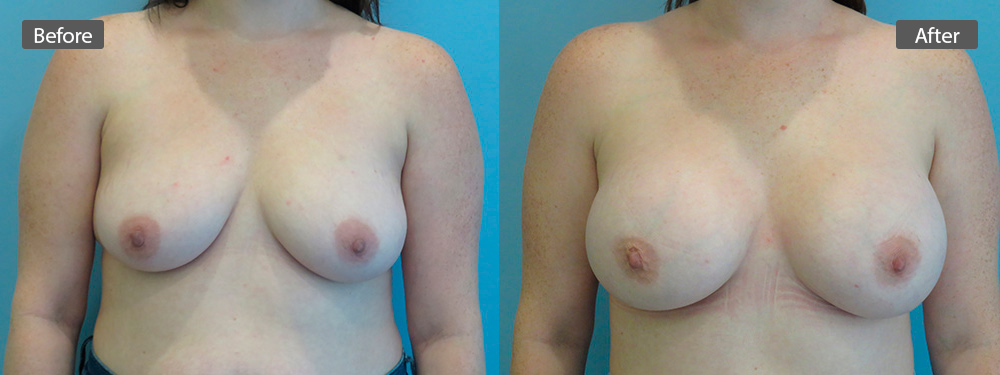
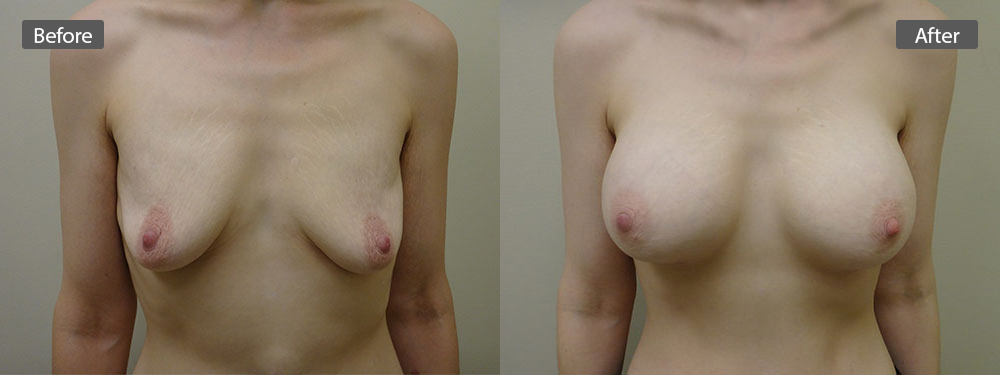
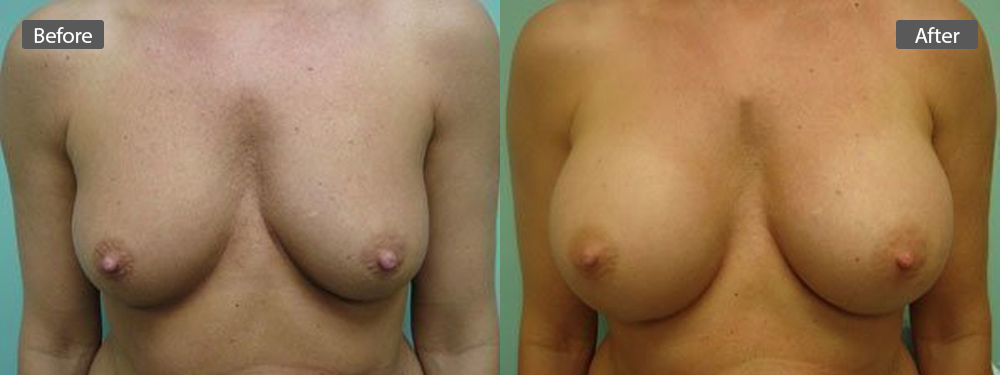
Warning:
This gallery contains nudity. Please click OK to confirm you are at least 18 years of age and are not offended by this material.
* All patients are unique and individual results may vary.
How Long Does Breast Augmentation Pain Last?
Pain tends to be strongest early and improve steadily. According to the ASPS, acute pain typically subsides after one to five days, while soreness and swelling may continue for a few weeks.
The First 24 Hours
After surgery, you rest in a recovery area where you are closely monitored, and many patients go home the same day. Your breasts are supported with dressings and a surgical bra or elastic band to help limit swelling. Soreness is often most noticeable the morning after surgery, when you may not feel like moving much. You will need a friend or family member to drive you home and help during the first part of recovery.
The First Few Days
This is when you may rely most on pain medication. Taking it easy during these first days gives your body time to heal, but short, gentle walks around the house are still helpful. As one plastic surgeon noted in the ASPS article, staying sedentary can make you feel stiffer and more sore.
After the First Week
By this point, most patients feel noticeably better, though soreness, swelling, and tightness may linger for a few weeks. Full recovery can take a month or more, and it may take about two months for the implants to settle into their final position.
What Can Affect Pain After Breast Augmentation?
No single factor decides how your recovery will feel. Implant placement, implant size, surgical technique, and your own healing all work together, and recovery can vary from one patient to the next even with a similar plan.
Does Implant Placement Affect Pain?
It can. I place implants in one of two pockets: over the chest muscle and directly behind the breast tissue (subglandular), or under the chest muscle (subpectoral). Which pocket makes sense depends on factors such as your body, the kind of implant, and the amount of added volume you are after.
Because subpectoral placement involves the chest muscle, some patients may feel more soreness or pressure, especially with arm movement. In the same ASPS article, one plastic surgeon described recovery with implants under the muscle as more painful and slower than recovery with placement above it. Still, placement is only one part of the picture, and under-the-muscle placement may be the better fit for some patients’ anatomy and goals.
Does Implant Size Affect Discomfort?
Size may play a role, but it does not determine your comfort on its own. I offer implants in a wide range of sizes, and the tissue around the implant has to stretch to accommodate it. For some patients, a larger implant relative to their natural breast tissue may mean more tightness in the early weeks. Size is something we choose together based on your anatomy and goals.
How Is Pain Managed After Breast Augmentation?
Good preparation may make recovery smoother. Before surgery, patients receive instructions on which medications to take or avoid, and they are asked to stop smoking for a month beforehand.
After surgery, these steps may help keep you comfortable:
- Prescribed medication: Based on ASPS guidance, postoperative medications may include pain pills and an antibiotic. Take them exactly as directed.
- Support garment: A supportive bra may help reduce swelling and discomfort as the incisions heal. The ASPS advises wearing it around the clock as instructed by your surgeon.
- Cold therapy: When your surgeon approves it, ice may help control swelling and pain.
- Light walking: Gentle movement keeps blood flowing and may reduce stiffness.
- Rest: Avoiding strain on your chest during the first days gives your body time to heal.
When Can You Return to Normal Activities?
Feeling better does not always mean you are ready for everything, so activity restrictions may continue even after pain improves. General milestones include:
- Work: Most patients return to non-strenuous work within two to four days. Jobs that are physically demanding may require more time.
- Driving: Driving depends on when you are off prescription pain medication and can move comfortably (see the FAQ below).
- Lifting: Avoid heavy lifting for several weeks.
- Exercise: Resume exercise gradually as your surgeon directs, with chest-focused workouts often coming later.
- Everyday routine: Most women return to their regular activities after about one to two months.
I schedule follow-up appointments to monitor your healing, and I see patients personally at every follow-up visit, so we can adjust these milestones as you recover.
When Should You Call Your Surgeon About Breast Pain?
Some soreness and swelling is expected, but certain changes may point to a complication. According to the FDA, possible complications of breast implants include hematoma, infection, seroma, and capsular contracture. A hematoma is a collection of blood near the surgical site, and a seroma is a collection of fluid around the implant. Capsular contracture occurs when the scar tissue capsule that forms around an implant tightens.
Call your surgeon if you notice:
- Pain that gets worse instead of better
- Sudden or significant swelling, especially if one breast looks much larger than the other
- Redness, warmth, or drainage around an incision
- A fever
- An incision that opens or does not seem to be healing
- A breast that becomes firm, hard, or painful weeks or months after surgery
If you have chest pain or trouble breathing, seek emergency care right away.
Planning Breast Augmentation in Austin, TX?
If concerns about recovery are part of your decision, a consultation is a good place to get clear answers. Every consultation is with me directly, so we can go over your goals and medical history and talk through implant placement, sizing, and what recovery may look like for you. My team is also available to answer questions throughout your recovery.
Call (512) 730-3885 or request a consultation online to explore breast augmentation in Austin.
Breast Augmentation Pain FAQs
How Should You Sleep After Breast Augmentation?
Many plastic surgeons recommend sleeping on your back with pillows to keep your upper body slightly raised during the first few weeks. This position may take pressure off your chest and make it easier to get in and out of bed. Wear your support bra while sleeping as directed, and avoid sleeping on your stomach or side until you are cleared.
When Can You Drive After Breast Augmentation?
You should not drive yourself home on the day of surgery. After that, driving depends on two things: whether you are still taking prescription pain medication, which can affect your ability to drive safely, and whether you can turn the wheel and react quickly without chest pain. Your surgeon can confirm when it is reasonable to drive based on how your recovery is progressing.
How Long Does Chest Tightness Last?
Tightness is usually most noticeable in the first few weeks and eases as swelling goes down and the implants settle, which may take about two months. If tightness returns or worsens later, or your breast becomes hard or misshapen, contact your surgeon, since these can be signs of capsular contracture.
Is Tingling or Numbness Normal After Breast Augmentation?
Some changes in sensation are common. The ASPS notes that patients may notice heightened sensitivity around the nipples in the weeks and months after surgery as nerves are stretched and irritated, and this usually improves over time. According to the FDA, feeling in the nipple or breast may increase or decrease after implant surgery, and these changes can be temporary or permanent, so let your surgeon know if numbness does not improve.