


Quick Answer: Exercise can reduce chest fat and build muscle, but it cannot remove glandular breast tissue. True gynecomastia involves glandular tissue, so it usually does not go away with exercise alone. When chest fullness persists despite weight loss and regular training, an evaluation by a plastic surgeon can determine what is causing it and whether surgery is an option.
If you have spent months on chest workouts and dieting, you may be wondering whether gynecomastia can go away with exercise. The answer depends on what is making the chest look full. Fat responds to exercise. Glandular tissue does not.
Can Gynecomastia Go Away with Exercise? Key Takeaways
- Exercise can reduce chest fat, but it cannot remove glandular breast tissue.
- Pseudogynecomastia is excess chest fat, and it may improve with weight loss.
- Gynecomastia that starts in puberty may resolve on its own, but long-standing cases in adults may not.
- Pain, a new lump, or other new symptoms should be checked by a physician.
- I treat gynecomastia in my office under local anesthesia with SmartLipo and removal of the glandular tissue.
Can Exercise Get Rid of Gynecomastia?
Exercise can change two things in the chest. It can reduce fat, and it can build the pectoral muscle underneath. It cannot eliminate glandular breast tissue, and that tissue is what defines gynecomastia.
This is why the difference between two similar-looking conditions matters:
- True gynecomastia is an increase in glandular tissue. It usually feels firm and concentrated under the nipple and areola, and it is often accompanied by some fat.
- Pseudogynecomastia is excess fat in the chest without the firm glandular component. It tends to look like a general increase in chest size.
According to Cleveland Clinic, weight loss may reduce pseudogynecomastia, but exercise is unlikely to help gynecomastia caused by a hormonal imbalance.
Why Is Your Chest Still Enlarged After Weight Loss?
When I examine a patient with gynecomastia, I look for three things: fat, glandular tissue, and loose skin. Weight loss only addresses the first.
If you have lost weight and your chest still looks full, one or more of these may be the reason:
- Glandular tissue remains. It does not shrink the way fat does when you lose weight.
- Some chest fat is stubborn. Fat in this area may be slow to respond to diet and exercise.
- The skin has stretched. After weight loss, loose skin can keep the chest from looking flat.
Building the chest muscle can improve your shape, but the tissue sitting on top of the muscle is still there.
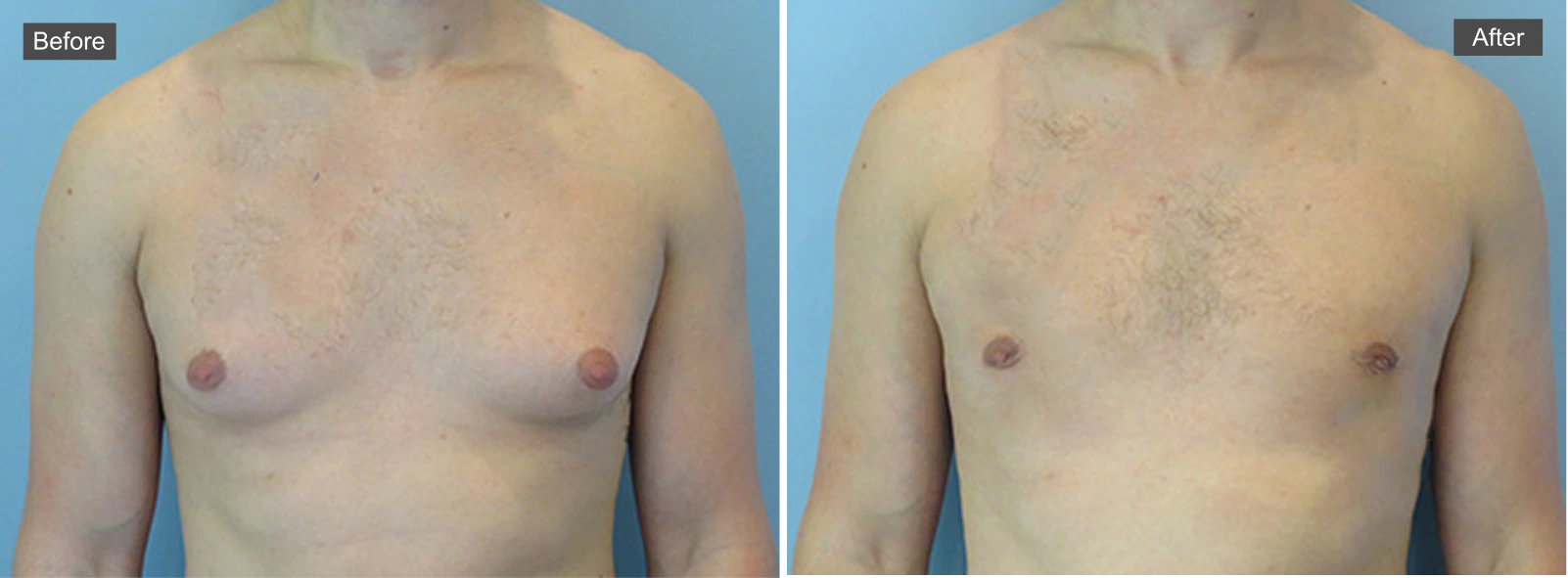
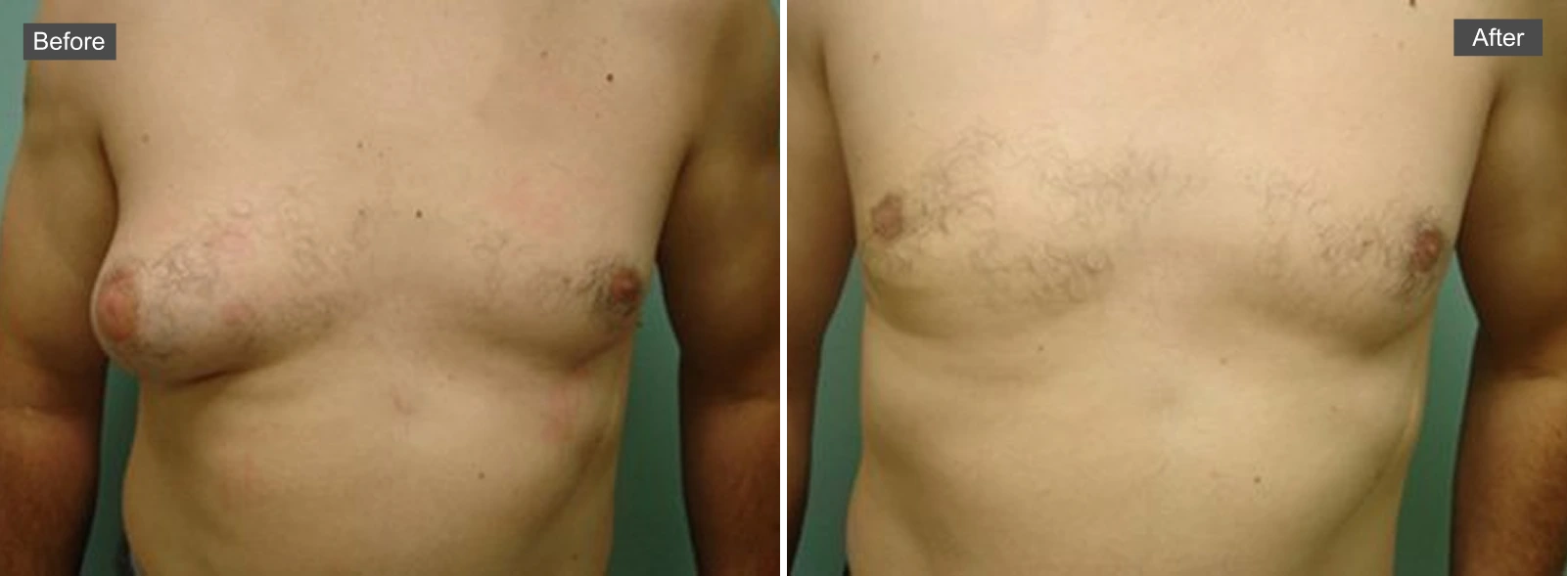
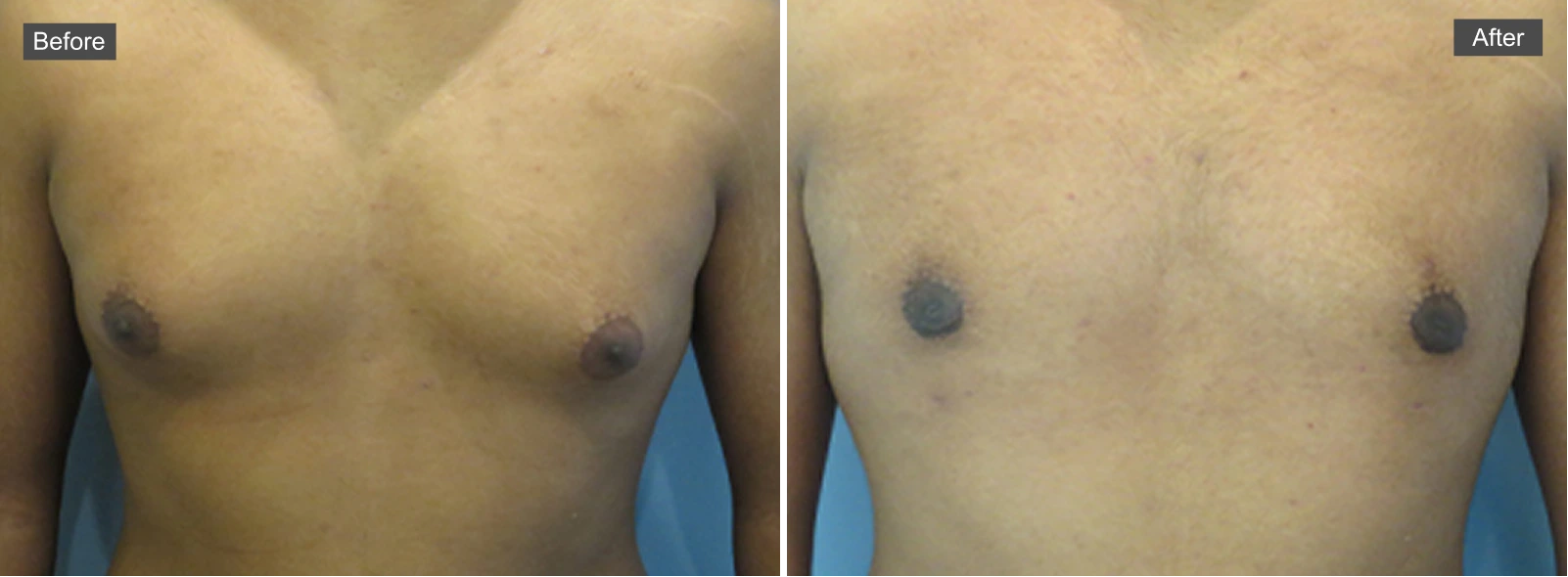
Can Gynecomastia Go Away Without Surgery?
Sometimes. It depends on the cause and how long the tissue has been present.
According to a StatPearls clinical review hosted by the National Library of Medicine, gynecomastia is associated with an imbalance between estrogen and testosterone. Based on information from Cleveland Clinic, it affects more than 50% of males at some point in life. Mayo Clinic notes that cases beginning during puberty often go away without treatment within six months to two years.
In adults, there are a few situations where it may improve without surgery:
- A medication or substance is the cause. Changing it may help, but never stop a prescription without talking to the provider who prescribed it.
- An underlying health condition is the cause. Treating that condition may also resolve the gynecomastia.
- The enlargement is mostly fat. Weight loss may reduce it.
If I suspect an underlying condition, I may work with your physician on additional testing before we discuss surgery. For glandular tissue that has stayed after the cause has been addressed, surgery is the way to remove it.
When Should You Stop Relying on Exercise?
Exercise is good for your health, and I would never tell you to stop. These are signs it may not be enough for your chest.
Your Chest Hasn’t Changed Despite Weight Loss
If your weight has come down and the rest of your body has changed but your chest has not, fat is probably not the only cause. Firm tissue behind the nipple that stays the same as you lose weight points to glandular tissue.
You’ve Had Chest Fullness for Years
Gynecomastia that begins in puberty often settles within two years. Fullness that has been stable for years in an adult may not resolve on its own. According to the StatPearls review, tissue that has been present for about a year becomes more fibrous, and medical therapy usually does not work in long-standing cases. Good candidates for surgery are men whose breast development has stabilized and has not gone away on its own.
Your Chest Appearance Affects Your Confidence
Gynecomastia is not physically harmful, but it can cause real self-consciousness. If you avoid fitted shirts, the pool, or the gym locker room because of your chest, that is a valid reason to have a consultation.
You Notice Pain or Unusual Changes
Gynecomastia can be tender. According to Mayo Clinic, swelling, pain or tenderness, and nipple discharge are reasons to see a health care provider. Have these or any other new symptom examined by a physician before you think about cosmetic treatment. Cleveland Clinic notes that breast cancer in men is much rarer than gynecomastia but can also cause a lump, and a physical exam helps tell the two apart.
When Is Gynecomastia Surgery Worth Considering?
Surgery may be appropriate when glandular tissue has persisted and it is causing physical discomfort or emotional distress. According to the American Society of Plastic Surgeons (ASPS), candidates include men who are physically healthy, of relatively normal weight, and realistic in their expectations. You may be a good candidate if:
- You are physically healthy and at a stable weight
- Your breast development has stabilized
- You don’t smoke, or you are willing to quit before and after surgery
- You have realistic expectations about the result
Every chest is different, so the plan depends on an exam. I look at how much of the fullness is fat, how much is gland, and how the skin is likely to respond.
Realistic expectations matter. You will see a change soon after surgery, but final results take three to six months as swelling resolves. Results are long-lasting with a stable weight. Significant weight gain, steroid use, or certain medical conditions may cause gynecomastia to return.
How Does Dr. Erella Treat Gynecomastia in Austin?
I perform gynecomastia surgery in my office as an awake procedure under local anesthesia. I confirm at your consultation whether awake surgery is right for you.
I address everything in one procedure:
- SmartLipo for fat and skin. The laser melts fat before it is removed and will help tighten the skin to a certain extent.
- Excision for the gland. I remove the firm glandular tissue directly through an incision along the edge of the areola.
Usually no drains are involved. After the procedure, we apply dressings and a compression garment, and patients leave the office in 15 to 20 minutes.
Recovery is usually short:
- Routine daily activity in two to three days
- Exercise in 10 to 14 days
- Weight lifting in three weeks
Ready to Discuss Your Options in Austin, TX?
If you have been working out and your chest hasn’t changed, an exam can tell you why. I’ll assess whether your chest fullness is fat, glandular tissue, or both and explain your options.
To schedule a consultation at Aspira Plastic Surgery & Med Spa in Austin, TX, call (512) 730-3885 or contact us online.