

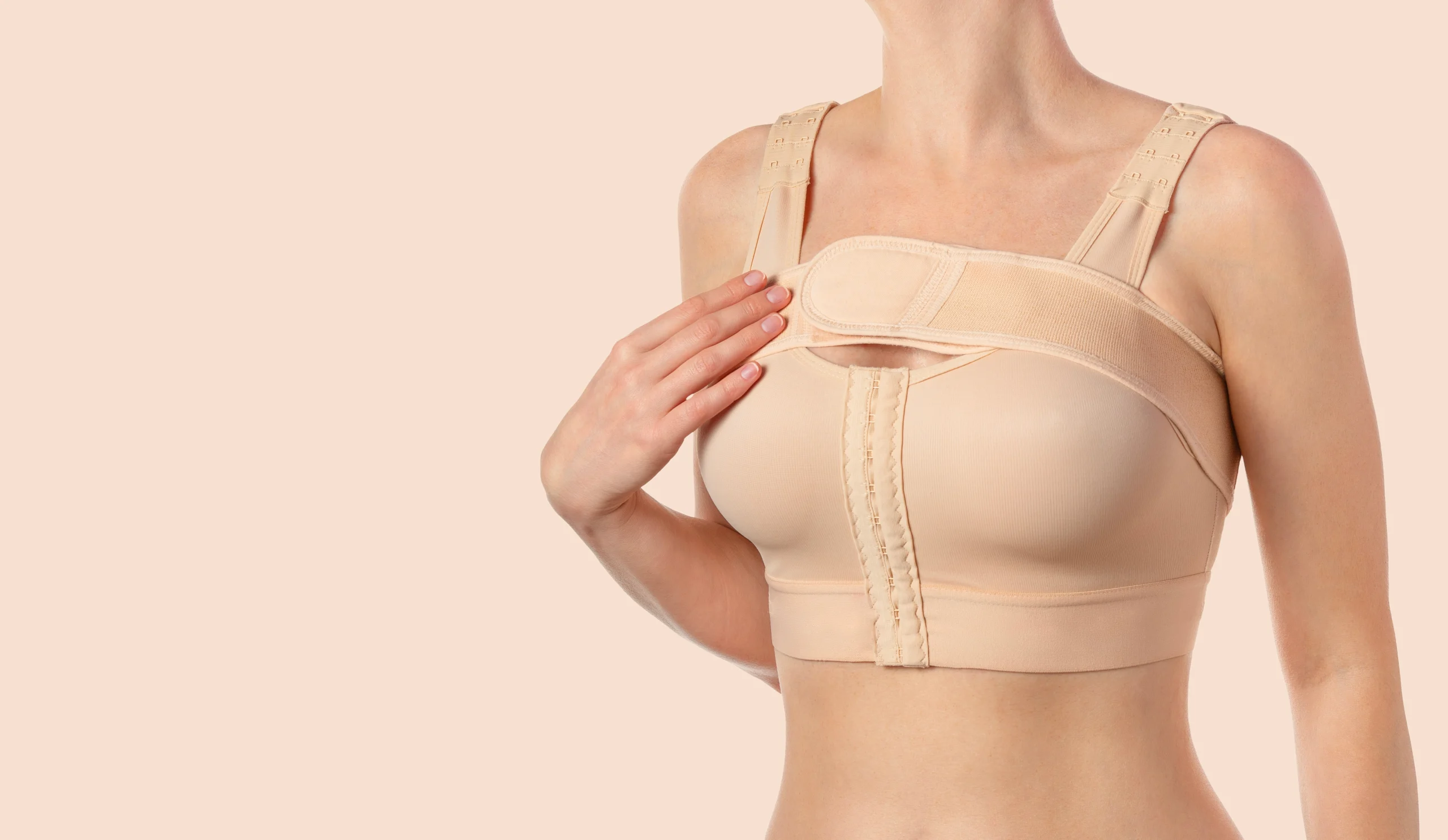
After a tummy tuck, your compression garment should feel snug and supportive, but not painfully tight. It should provide firm, even pressure around your abdomen without making it difficult to breathe, sit, stand, or move comfortably. A good rule of thumb is that the garment should feel like a gentle, supportive hug around your midsection, rather than something that squeezes or restricts you.
The right fit can change as postoperative swelling decreases. A garment that fits well during the first stage of recovery may begin to feel looser later on. If the garment becomes painful, restrictive, or noticeably uncomfortable, contact your surgical team for guidance. Always follow the specific garment and wear-time instructions provided by your plastic surgeon.
Proper Fit vs. Too Tight vs. Too Loose
A tummy tuck compression garment should provide firm, even support without causing pain or restriction. The table below can help you tell whether your garment is fitting properly or may need to be adjusted.
Proper Fit | May Be Too Tight | May Be Too Loose |
|---|---|---|
Feels snug and evenly supportive | Causes painful pressure or pinching | Slides or shifts during movement |
Allows you to breathe normally | Makes it difficult to take a full breath | Leaves noticeable gaps between the garment and your body |
Feels secure when sitting, standing, and walking | Causes persistent numbness or tingling | Provides little noticeable support |
Lies smoothly against the skin | Creates deep, uncomfortable indentations | Bunches, folds, or rolls repeatedly |
Feels firm without increasing discomfort | Causes worsening pain or unusual skin discoloration | Feels significantly less supportive as swelling decreases |
A properly fitted garment should feel supportive rather than restrictive. Because swelling changes throughout recovery, the fit may also change over time. If you are unsure whether your garment is too tight or too loose, contact your surgical team before making major changes to your postoperative compression routine.
Ready to elevate your results?
How Do You Know If Your Compression Garment Is Too Tight?
Your compression garment should feel firm and supportive, but it should not cause pain, restrict normal breathing, or create persistent numbness or tingling. Excessive compression can make recovery more uncomfortable and may interfere with normal circulation.
Signs that your tummy tuck compression garment may be too tight include:
- Persistent numbness or tingling beneath or around the garment
- Painful pressure or pinching that does not improve with normal position changes
- Deep, uncomfortable indentations in the skin
- Unusual skin discoloration or skin that feels unusually cold
- Increasing discomfort or swelling below the compressed area
- Difficulty taking a full, comfortable breath
- A garment that consistently digs into the skin, rolls, or creates concentrated pressure in one area
Some temporary skin impressions can occur with a snug garment, so marks alone do not necessarily mean the garment is too tight. The bigger concern is when pressure is accompanied by pain, numbness, tingling, discoloration, breathing difficulty, or worsening symptoms.
Can You Sleep Without a Compression Garment After a Tummy Tuck?
Whether you can sleep without your compression garment depends on your stage of recovery and your postoperative instructions. Early in recovery, many patients are advised to wear compression both during the day and while sleeping, removing it only when instructed.
As swelling decreases, your surgeon may allow you to reduce how often you wear the garment. Do not stop wearing it overnight simply because it feels more comfortable without it. If the garment is causing pain, numbness, breathing difficulty, or significant discomfort while sleeping, contact your surgeon.
What Happens If Your Compression Garment Is Too Loose?
A compression garment that is too loose may not provide the level of support your surgeon intended. Signs of a loose fit include the garment sliding, bunching, rolling, or leaving noticeable gaps between the fabric and your body.
As swelling decreases, a garment that originally fit well may also begin to feel loose. If this happens, ask your surgical team whether you need a different size or garment rather than simply tightening it on your own.
Why Is Compression Used After a Tummy Tuck?
After a tummy tuck, swelling and tenderness are expected as the abdomen heals. A compression garment provides gentle, even support around the treated area, which can help the abdomen feel more secure during everyday movements such as standing, walking, or changing positions.
Compression is also commonly used to help manage postoperative swelling and support the abdomen as it heals, according to the American Society of Plastic Surgeons. The goal is not to squeeze the abdomen as tightly as possible, but to provide consistent support without creating painful pressure, restricting breathing, or causing other symptoms of excessive compression.
Your compression needs depend on the extent of your surgery and your recovery. A garment that feels appropriately snug early on may become looser as swelling decreases, and your surgeon may recommend adjusting the garment, changing sizes, or transitioning to a different type of support.
How Long Should You Wear a Compression Garment After a Tummy Tuck?
How long you need to wear compression after a tummy tuck depends on the extent of your surgery, your healing progress, and your surgeon’s postoperative protocol. There is no single wear schedule that is appropriate for every patient.
During the earlier stages of recovery, your surgeon may recommend more consistent compression and then gradually reduce wear as swelling improves and the tissues heal. Your garment may also need to be adjusted or replaced as your body changes during recovery.
Wear time can vary between patients and postoperative protocols. For example, Mayo Clinic notes that some patients may wear an abdominal binder for about six to eight weeks after a tummy tuck, while the surgical team provides individualized recovery instructions.
At Aspira Plastic Surgery, compression recommendations vary by procedure and stage of recovery. Full tummy tuck guidance includes compression during the early recovery period, while high-BMI tummy tuck patients may be advised to use an abdominal compression garment later in recovery. Follow the schedule provided for your specific procedure and healing progress.
Abdominal Binder vs. Compression Garment
An abdominal binder is a wide, adjustable wrap that supports the abdomen and may be easier to use during the early stages of tummy tuck recovery. A fitted compression garment typically provides more consistent coverage across the treated area.
One is not automatically better than the other. Your surgeon may recommend a binder, a fitted garment, or a transition between the two depending on your procedure and stage of recovery.
Do not switch garment types or compression levels without checking with your surgical team, especially early after surgery.
How to Choose a Compression Garment After a Tummy Tuck
The right compression garment should fit smoothly against the treated area and provide firm, even support without pinching, rolling, bunching, or creating concentrated pressure points.
When choosing a garment, consider:
- Coverage that matches the areas treated during surgery
- Firm, even compression rather than isolated tight spots
- Breathable, comfortable fabric
- Closures that are easy to use while mobility is limited
- A fit that stays in place without digging into the skin
Compression garments come in different styles and coverage levels. Some focus mainly on the abdomen, while others may extend over the hips or thighs when those areas were also treated. Your surgeon can recommend the style and compression level that best matches your procedure.
As swelling decreases, a garment that fit well early in recovery may become too loose, so you may need a different size or style. Some patients also find it useful to have a second garment available while the first is being washed.
Because the garment may be worn for extended periods, keep it clean and dry and follow your surgeon’s and manufacturer’s washing instructions.
When Should You Call Your Surgeon?
Contact your surgical team if your compression garment causes persistent pain, numbness, tingling, unusual skin discoloration, worsening swelling, or significant difficulty breathing comfortably. You should also reach out if the garment suddenly feels much tighter or looser than before, or if you are unsure whether the fit is appropriate as swelling changes.
Your surgeon can determine whether the garment needs to be adjusted, replaced, or worn differently based on your stage of recovery. Do not make major changes to your postoperative compression routine without guidance from your surgical team.
Final Thoughts
A tummy tuck compression garment should feel snug and supportive. The right fit may change as swelling decreases, so pay attention to comfort, pressure, and any new symptoms throughout your recovery.
Most importantly, follow the postoperative instructions provided by your plastic surgeon rather than relying on a general timeline or compression level found online.
If you’re considering a tummy tuck or another body contouring procedure, contact Aspira Plastic Surgery to learn more about your options and what to expect before and after surgery.